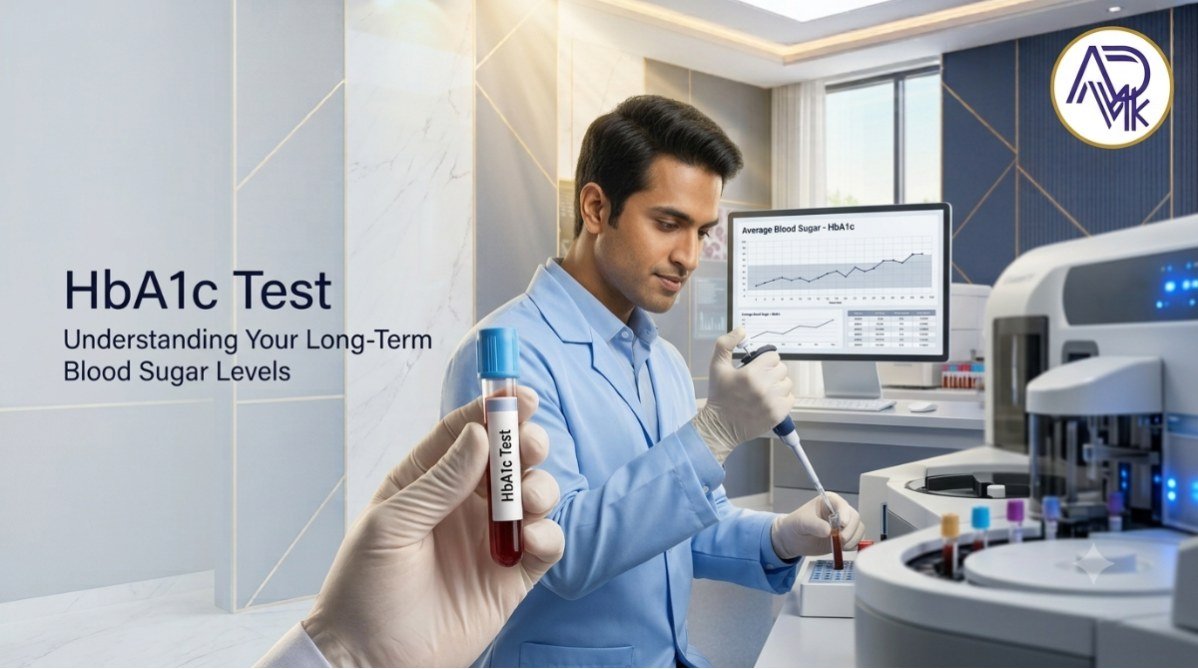
What Is the HbA1c Test? Exclusive Guide in 2026.
What Is the HbA1c Test?
The HbA1c test, also called the hemoglobin A1c or glycated hemoglobin test, is a blood test that measures your average blood sugar level over the past 2–3 months. It is commonly used to help detect prediabetes and type 2 diabetes and to monitor blood sugar control in people with diabetes.
Unlike some blood glucose tests, fasting is usually not required for an HbA1c test.
What Does the HbA1c Test Mean?
The HbA1c test, also known as the glycated hemoglobin test, measures your average blood sugar level over the past two to three months. It measures how much glucose is bound to hemoglobin in your red blood cells.
Unlike a fasting blood sugar test, the HbA1c test usually does not require fasting. It is commonly used to diagnose diabetes, identify prediabetes, and monitor how well diabetes is being controlled over time.
In general, an HbA1c level below 5.7% is considered normal, 5.7% to 6.4% may indicate prediabetes, and 6.5% or higher may suggest diabetes when confirmed by a healthcare professional. Your doctor will interpret the result based on your overall health and medical history.
What Is the Full Form of the HbA1c Test?
The full form of HbA1c is Hemoglobin A1c, also called glycated hemoglobin. The HbA1c test is a blood test that measures the percentage of hemoglobin with glucose attached. It reflects your average blood sugar levels over the past 2–3 months and is commonly used to diagnose and monitor diabetes.
What Are the Uses of the HbA1c Test?
The HbA1c test measures your average blood sugar level over the past 2–3 months. Its main uses include diagnosing prediabetes and type 2 diabetes, monitoring blood sugar control in people with diabetes, and helping doctors assess whether treatment or lifestyle changes are working effectively. Unlike a daily blood glucose test, HbA1c does not require fasting.
What Are the Benefits of the HbA1c Test?
The HbA1c test provides an overview of your average blood sugar levels over the past 2–3 months. Its key benefits include:
- Helps diagnose prediabetes and diabetes
- Monitors long-term blood sugar control in people with diabetes
- Usually does not require fasting
- Helps doctors evaluate whether a treatment plan is working
- Can identify consistently high blood sugar levels before symptoms become noticeable
It is a convenient and useful test for assessing long-term blood glucose control.
Why Is the HbA1c Test Done?
The HbA1c test measures your average blood sugar levels over the past 2–3 months. It is commonly used to diagnose prediabetes and type 2 diabetes and to monitor how well diabetes is being managed. Unlike a fasting blood sugar test, HbA1c generally does not require fasting, making it a convenient way to assess long-term blood glucose control.
What Are the Common Symptoms That May Require an HbA1c Test?
An HbA1c test may be recommended if you have symptoms associated with high blood sugar, such as frequent urination, excessive thirst, increased hunger, unexplained weight changes, fatigue, blurred vision, or slow-healing wounds. It may also be advised if you have risk factors for diabetes, as diabetes can sometimes develop without noticeable symptoms.
Why Is the HbA1c Test Important?
The HbA1c test is important because it measures your average blood sugar levels over the past 2–3 months. Unlike a fasting blood sugar test, it provides a longer-term picture of blood glucose control.
It helps doctors diagnose prediabetes and type 2 diabetes, monitor diabetes management, and assess whether treatment is working effectively. Regular HbA1c testing can also help identify consistently high blood sugar early and support timely medical care.
Are There Any Risks Associated With the HbA1c Test?
The HbA1c test is generally safe and has very few risks. Since it requires a small blood sample, you may experience mild pain, bruising, or slight bleeding at the needle site. Some people may briefly feel dizzy after the blood draw. Serious complications are extremely rare, making HbA1c testing a simple and commonly used way to monitor average blood sugar levels.
What Is the Best Time for the HbA1c Test?
There is no specific time of day required for an HbA1c test. Unlike a fasting blood sugar test, you can usually have the test at any time of the day, with or without food. HbA1c reflects your average blood glucose levels over the previous 2–3 months, so recent meals generally do not significantly affect the result.
Does the HbA1c Test Require Fasting?
No, the HbA1c test does not require fasting. You can usually eat and drink normally before the test because HbA1c measures your average blood sugar levels over the past 2–3 months, rather than your current blood glucose level.
However, if your doctor has prescribed HbA1c along with other blood tests that require fasting, you may need to fast for those tests.
What Is the HbA1c Test Procedure?
The HbA1c test procedure is simple and usually takes only a few minutes. A healthcare professional collects a small blood sample from a vein in your arm. The sample is sent to a laboratory to measure the percentage of hemoglobin that is glucose-attached, reflecting your average blood sugar levels over the past 2–3 months. Fasting is generally not required for an HbA1c test.
What Is the HbA1c Test Preparation?
The HbA1c test requires little to no special preparation. You can usually eat, drink, and take your regular medicines as advised by your doctor before the blood sample is collected. Fasting is generally not required because the test measures your average blood sugar levels over the past 2–3 months rather than your current blood glucose level.
What Happens During an HbA1c Test?
An HbA1c test is a simple blood test that measures your average blood sugar levels over the past 2–3 months. A healthcare professional collects a small blood sample, usually from a vein in your arm, and sends it to a laboratory for analysis. The test takes only a few minutes and usually does not require fasting.
How Does the HbA1c Test Work?
The HbA1c test measures the amount of glucose (sugar) attached to hemoglobin in your red blood cells. Because red blood cells typically live for about 120 days, the test provides an estimate of your average blood glucose levels over the past 2–3 months. A higher HbA1c percentage generally indicates higher average blood sugar levels.
The test requires a small blood sample and usually does not require fasting, so it can generally be performed at any time of day.
What Do the Results of the HbA1c Test Mean?
The HbA1c test shows your average blood sugar level over the past 2–3 months. Generally, the results are interpreted as:
- Below 5.7%: Normal range
- 5.7%–6.4%: Prediabetes range
- 6.5% or higher: Diabetes range
If you already have diabetes, your doctor may set an individual HbA1c target based on your overall health and treatment plan. A single result should always be interpreted alongside your medical history and other blood glucose test results.
What Is the HbA1c Test Result Time?
The HbA1c test result time is usually within a few hours to 1–2 days, depending on the diagnostic laboratory. Some advanced laboratories may provide the report on the same day, while others may take longer for processing.
Since the HbA1c test measures your average blood sugar levels over the past 2–3 months, you do not need to fast before having the test in most cases.
What Is the HbA1c Test Level?
The HbA1c test measures your average blood sugar level over the previous 2–3 months. Results are reported as a percentage:
- Below 5.7%: Normal
- 5.7%–6.4%: Prediabetes
- 6.5% or higher: Diabetes
An HbA1c test usually does not require fasting. A healthcare professional should interpret a diagnosis and may require confirmation with another test.
What Is the HbA1c Test Report?
An HbA1c test report shows your average blood sugar level over the past 2–3 months. The result is given as a percentage. Generally, an HbA1c level below 5.7% is considered normal, 5.7%–6.4% may indicate prediabetes, and 6.5% or higher may indicate diabetes. Your doctor should interpret the result along with your symptoms and other test findings.
What Is the HbA1c Test Normal Range?
For most adults, the normal HbA1c range is below 5.7%. The commonly used categories are:
- Below 5.7%: Normal
- 5.7%–6.4%: Prediabetes range
- 6.5% or higher: Diabetes range
HbA1c reflects your average blood glucose level over the previous 2–3 months. A diagnosis of diabetes may require confirmation with repeat or additional testing, depending on the circumstances.
What Is the Best Time for an HbA1c Test?
There is no specific time of day required for an HbA1c test. Unlike fasting blood sugar tests, an HbA1c test can be done at any time of the day, and fasting is generally not required. It measures your average blood glucose levels over approximately the past 2–3 months, making it useful for screening and monitoring diabetes.
Where Can I Get an HbA1c Test Near Me?
If you're searching for an HbA1c test near me, you can get this blood test at most reliable diagnostic centres and pathology labs. An HbA1c test measures your average blood glucose levels over the past 2–3 months and is commonly used to screen for and monitor diabetes.
When choosing a diagnostic centre, consider:
- Accurate and reliable laboratory testing
- Experienced laboratory professionals
- Timely digital reports
- Convenient sample collection
- Home sample collection, if available
Choose a trusted diagnostic centre to ensure your HbA1c test is performed accurately and your report is delivered on time.
What Is the HbA1c Test Price?
The HbA1c test price varies depending on the diagnostic centre, location, laboratory, and whether home sample collection is included. In Delhi, current listed prices range from around ₹399 to ₹509 at some major diagnostic providers.
The HbA1c test generally does not require fasting and measures your average blood glucose level over the previous 2–3 months.
For an exact price, check whether the quoted amount includes sample collection and report charges.
Where Can I Get an HbA1c Test Near Me, and What Is the Price?
If you're looking for an HbA1c test near you, it's available at most diagnostic centres and pathology laboratories. The price varies by location, laboratory, and whether home sample collection is included. For example, current listings in Delhi show HbA1c testing at around ₹509 at one major provider.
The HbA1c test generally does not require fasting and measures your average blood glucose levels over approximately the previous 2–3 months.
What Is the HbA1c Test Price in Delhi?
The HbA1c test price in Delhi generally ranges from ₹350 to ₹750, depending on the diagnostic centre, laboratory, and any available discounts. Current listings show examples around ₹399–₹400 in Delhi.
The HbA1c test usually does not require fasting and measures your average blood sugar levels over the previous 2–3 months.
Prices can change, so it is best to confirm the current cost and report time with the diagnostic centre before booking.
Conclusion
The HbA1c test is a simple blood test that provides an estimate of your average blood sugar levels over the past 2–3 months. It is widely used to screen for diabetes, support diagnosis, and monitor blood sugar control over time.
If your doctor recommends an HbA1c test, getting it done at a reliable diagnostic centre with quality laboratory facilities can help ensure accurate and timely results. Regular monitoring, when advised by your healthcare professional, can support better diabetes management and overall health.
Leave a comments