What Is a CT Angiography? Full Guide in 2026.
What Is a CT Angiography?
A CT Angiography (CTA) is a non-invasive imaging test that uses computed tomography (CT) scans along with a contrast dye to create detailed images of the body's blood vessels. It helps doctors examine arteries and veins for abnormalities such as blockages, narrowing, aneurysms, blood clots, or other vascular conditions.
During the procedure, a contrast dye is injected into a vein, and the CT scanner captures high-resolution images as the dye flows through your blood vessels. These images allow doctors to evaluate blood circulation and diagnose conditions affecting the heart, brain, lungs, kidneys, abdomen, and legs without the need for traditional invasive angiography.
A CT angiography scan is quick, accurate, and painless, making it one of the most effective diagnostic tools for detecting vascular diseases and helping doctors plan the most appropriate treatment.
What is the CT Angiography Full Form?
The full form of CT Angiography is Computed Tomography Angiography (CTA). It is an advanced diagnostic imaging test that combines CT scan technology with a contrast dye to produce detailed images of blood vessels throughout the body.
CT Angiography helps doctors evaluate the arteries and veins, detect blockages, narrowing, aneurysms, blood clots, and other vascular conditions. It is commonly used to examine the heart, brain, lungs, kidneys, neck, and legs, enabling early diagnosis and effective treatment planning.
This non-invasive and highly accurate scan provides clear images of blood flow and is often recommended as an alternative to conventional angiography for many vascular conditions.
What Are the Benefits of CT Angiography?
A CT Angiography (CTA) is an advanced, non-invasive imaging test that provides detailed images of blood vessels and helps doctors diagnose vascular conditions with high accuracy. Some of its key benefits include:
- Early detection of blocked, narrowed, or damaged blood vessels.
- Non-invasive alternative to traditional catheter angiography in many cases.
- Fast and accurate results help doctors make timely treatment decisions.
- Helps diagnose conditions such as aneurysms, blood clots, coronary artery disease, and peripheral artery disease.
- Assists in treatment planning and monitoring the effectiveness of ongoing therapies.
- Produces high-resolution 3D images for a detailed evaluation of the blood vessels.
What Are the Side Effects of CT Angiography?
CT Angiography (CTA) is generally a safe and well-tolerated imaging test. Most people experience no side effects. However, because the scan often uses a contrast dye, some patients may notice a brief warm sensation, a metallic taste in the mouth, or mild nausea. These effects are temporary and usually disappear quickly.
In rare cases, some people may have an allergic reaction to the contrast dye or experience kidney-related complications, especially if they have existing kidney disease. Your doctor will review your medical history before the scan to minimize any risks. Overall, the benefits of an accurate diagnosis usually outweigh the potential side effects.
When Is CT Angiography Used?
CT Angiography (CTA) is used to examine the blood vessels and detect conditions that may affect blood flow. Doctors recommend this scan when they suspect problems such as blocked or narrowed arteries, aneurysms, blood clots, congenital blood vessel abnormalities, or vascular injuries.
It is commonly used to evaluate the heart, brain, lungs, kidneys, abdomen, and legs, helping doctors diagnose cardiovascular and vascular conditions accurately. CT Angiography also assists in treatment planning and monitoring the effectiveness of ongoing medical care.
How Does CT Angiography Work?
CT angiography (CTA) uses X-rays, advanced computer technology, and a contrast dye to create detailed images of blood vessels throughout the body. During the scan, the contrast dye is injected into a vein, making the blood vessels clearly visible. As the CT scanner captures multiple cross-sectional images, a computer combines them into detailed 3D images of the arteries and veins.
This allows doctors to detect blockages, narrowing, aneurysms, blood clots, and other vascular abnormalities accurately, helping them diagnose and plan the most appropriate treatment.
How to CT Angiography Procedure?
A CT Angiography (CTA) is a quick, non-invasive imaging test used to examine blood vessels throughout the body. Before the scan, a contrast dye is injected into a vein in your arm to make the blood vessels clearly visible. You will then lie on a motorized table that moves through the CT scanner while it captures detailed cross-sectional images. During the scan, you may be asked to hold your breath for a few seconds to improve image quality. The entire procedure usually takes 15 to 30 minutes, and you can typically resume your normal activities shortly after the scan unless your doctor advises otherwise.
What Will I Experience During and After the CT Angiography Procedure?
During a CT angiography (CTA) scan, you will lie comfortably on a scanning table that moves through the CT machine. If a contrast dye is used, you may briefly feel a warm sensation or notice a metallic taste in your mouth, which usually goes away within a few minutes. The scan itself is quick and painless.
After the procedure, you can usually return to your normal activities unless your doctor advises otherwise. Drinking plenty of water helps flush the contrast dye from your body. If you experience any unusual symptoms, such as a rash or difficulty breathing, seek medical attention immediately.
What Will the CT Angiography Results Show?
A CT angiography (CTA) provides detailed images of your blood vessels and helps doctors evaluate blood flow throughout the body. The results can identify narrowed or blocked arteries, aneurysms, blood clots, abnormal blood vessels, plaque buildup, and other vascular conditions. Based on the findings, your doctor can diagnose the underlying problem and recommend the most appropriate treatment or further testing if needed.
What Are the Risks of CT Angiography?
CT Angiography (CTA) is generally a safe and commonly performed imaging test, but like any medical procedure, it carries a few potential risks. These may include exposure to a small amount of radiation and a rare allergic reaction to the contrast dye used during the scan. People with kidney disease may require additional precautions, as the contrast dye can affect kidney function. Your doctor will assess your medical history to ensure the scan is safe and appropriate for you.
How Should I Prepare for CT Angiography? Step-by-Step
Preparing for a CT Angiography (CTA) is simple and helps ensure accurate results. Follow these steps:
Step 1: Follow fasting instructions – You may be asked not to eat or drink for 4–6 hours before the scan, especially if contrast dye will be used.
Step 2: Stay hydrated – Drink plenty of water unless your doctor advises otherwise.
Step 3: Inform your doctor – Tell your doctor if you are pregnant, have kidney disease, diabetes, asthma, or any allergies, especially to contrast dye.
Step 4: Share your medications – Inform your healthcare provider about all medicines and supplements you are taking. You may need to stop certain medications temporarily.
Step 5: Wear comfortable clothing – You may be asked to change into a hospital gown and remove metal objects such as jewelry, watches, or eyeglasses.
Step 6: Arrive early – Reach the diagnostic centre 15–30 minutes before your appointment to complete the necessary paperwork.
Following these preparation steps helps ensure a smooth CT angiography procedure and accurate imaging results.
What Does the CT Angiography Equipment Look Like?
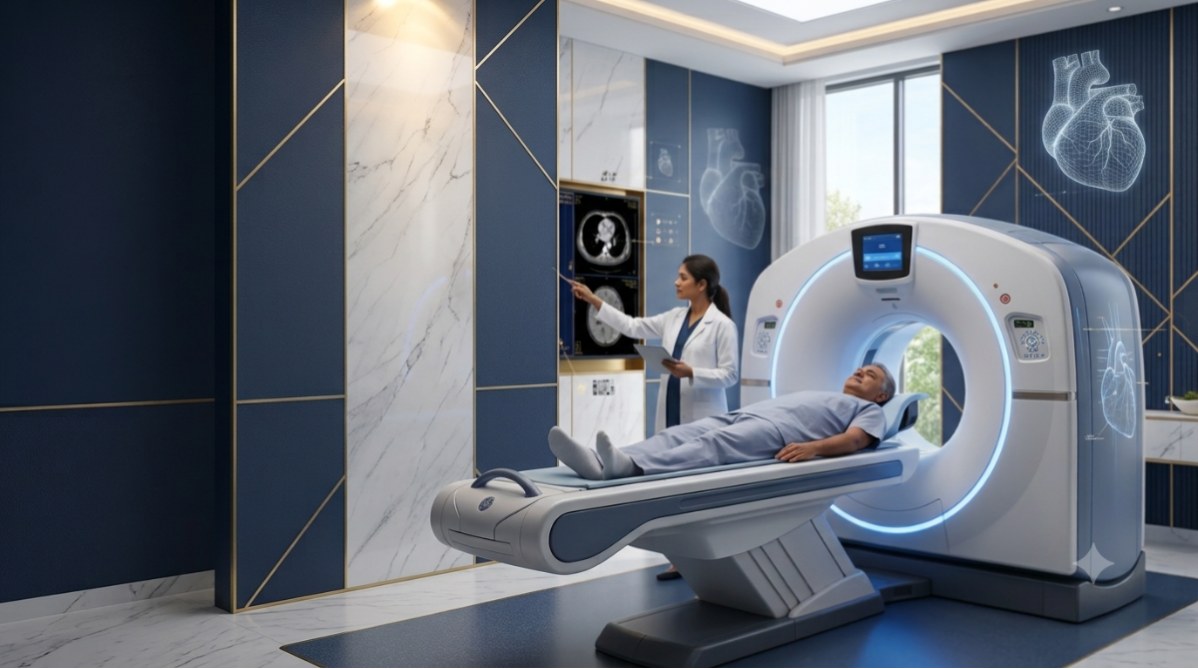
A CT angiography (CTA) machine consists of a large, doughnut-shaped scanner with a narrow, motorized table that slides through its center. During the scan, the X-ray tube and detectors rotate around your body to capture detailed images of your blood vessels. The procedure is quick, painless, and performed by a trained radiology professional using advanced imaging technology.
What is a CT Angiography of the brain?
A CT Angiography (CTA) Brain is an advanced imaging test that uses computed tomography (CT) and a contrast dye to create detailed images of the blood vessels in the brain. It helps doctors evaluate blood flow and detect abnormalities such as aneurysms, blood vessel narrowing (stenosis), blockages, arteriovenous malformations (AVMs), and other vascular conditions.
This non-invasive scan is commonly recommended for patients experiencing severe headaches, dizziness, stroke symptoms, vision problems, or suspected brain vascular disorders. The procedure is quick, usually completed within 15–30 minutes, and provides highly accurate images that help doctors diagnose conditions early and plan the most appropriate treatment.
CTA Brain is a valuable diagnostic tool for assessing the health of the brain's blood vessels and supporting timely medical intervention when needed.
What is the CT Angiography of the Heart?
CT Angiography of the Heart, also known as Coronary CT Angiography (CCTA), is a non-invasive imaging test that uses CT scan technology and a contrast dye to create detailed images of the heart and coronary arteries. It helps doctors evaluate blood flow, detect blocked or narrowed arteries, identify plaque buildup, and diagnose coronary artery disease (CAD).
This advanced scan is commonly recommended for people experiencing chest pain, shortness of breath, or symptoms that may indicate heart disease. It provides accurate results, enabling early diagnosis and helping doctors plan the most appropriate treatment while often avoiding more invasive procedures.
CT Angiography vs Angiography
CT Angiography (CTA) and conventional angiography are both used to examine blood vessels, but they differ in how they are performed.
CT Angiography is a non-invasive imaging test that uses a CT scanner and contrast dye injected into a vein to create detailed images of blood vessels. It is commonly used to detect blockages, aneurysms, and other vascular conditions without the need for surgery.
Conventional angiography, also known as catheter angiography, is an invasive procedure in which a thin catheter is inserted into an artery to inject contrast dye directly into the blood vessels. While it provides highly detailed images and can also be used for treatment, it carries a slightly higher risk and requires a longer recovery time.
For many diagnostic purposes, CT angiography is the preferred first-line test because it is faster, less invasive, and allows patients to return to their normal activities shortly after the scan. However, your doctor will recommend the most suitable option based on your medical condition.
Where Can You Get a CT Angiography in Delhi?
If you're looking for a CT Angiography in Delhi, choose a diagnostic centre or hospital with advanced CT scan technology, experienced radiologists, and high-quality cardiac imaging services. A CT angiography requires specialized equipment and expertise to produce accurate images of your blood vessels.
Some well-known diagnostic centres in Delhi that offer CT angiography include:
Before booking your scan, ensure the centre has modern CT equipment, qualified radiologists, and follows proper safety protocols for contrast-enhanced imaging. It's also advisable to schedule your appointment based on your doctor's recommendation and carry any previous medical reports for comparison.
Where Can I Get a CT Angiography Near Me?
If you're searching for CT angiography near me, choose a trusted diagnostic centre or hospital equipped with advanced CT scan technology and experienced radiologists. CT angiography requires high-quality imaging to accurately evaluate blood vessels and detect conditions such as blockages, aneurysms, or narrowing.
When selecting a diagnostic centre, look for:
- Advanced multi-slice CT scanner
- Experienced radiologists and trained technicians
- Accurate and timely reports
- Hygienic and patient-friendly environment
- Easy appointment booking and minimal waiting time
Choosing a reliable imaging centre helps ensure an accurate diagnosis and supports your doctor in planning the most appropriate treatment. Always consult your healthcare provider if you have any questions before the scan.
What Is the CT Angiography Price?
The CT Angiography (CTA) price in India typically ranges from ₹6,000 to ₹20,000, depending on the type of angiography, the body part being examined, the city, the diagnostic centre, and whether contrast dye is required.
The cost may vary for scans such as CT Coronary Angiography, CT Brain Angiography, CT Pulmonary Angiography, or CT Peripheral Angiography. To get the exact price, it's best to contact your preferred diagnostic centre, as charges may differ based on the technology used and the complexity of the scan.
Always choose a trusted imaging centre with advanced CT technology and experienced radiologists to ensure accurate results and quality care.
CT Angiography Price in Delhi
The price of a CT Angiography scan in Delhi generally ranges from ₹4,500 to ₹16,000, depending on the type of CT angiography, the body part being examined, the diagnostic centre, the technology used, and whether contrast dye is included. For example, CT Coronary Angiography typically costs between ₹8,000 and ₹14,000 in many diagnostic centres across Delhi.
Before booking your scan, confirm that the quoted price includes the contrast injection, radiologist's reporting fees, and any additional charges. Choosing a trusted diagnostic centre with advanced CT technology and experienced radiologists helps ensure accurate results and quality care.
Conclusion
CT Angiography is a fast, accurate, and non-invasive imaging test that helps doctors evaluate blood vessels and detect conditions such as blockages, aneurysms, and narrowed arteries. It plays a crucial role in the early diagnosis and effective management of cardiovascular and vascular diseases.
If your doctor recommends a CT angiography scan, choose a trusted diagnostic centre with advanced CT technology and experienced radiologists for precise results. Early diagnosis can help guide timely treatment and improve overall health outcomes.
Leave a comments