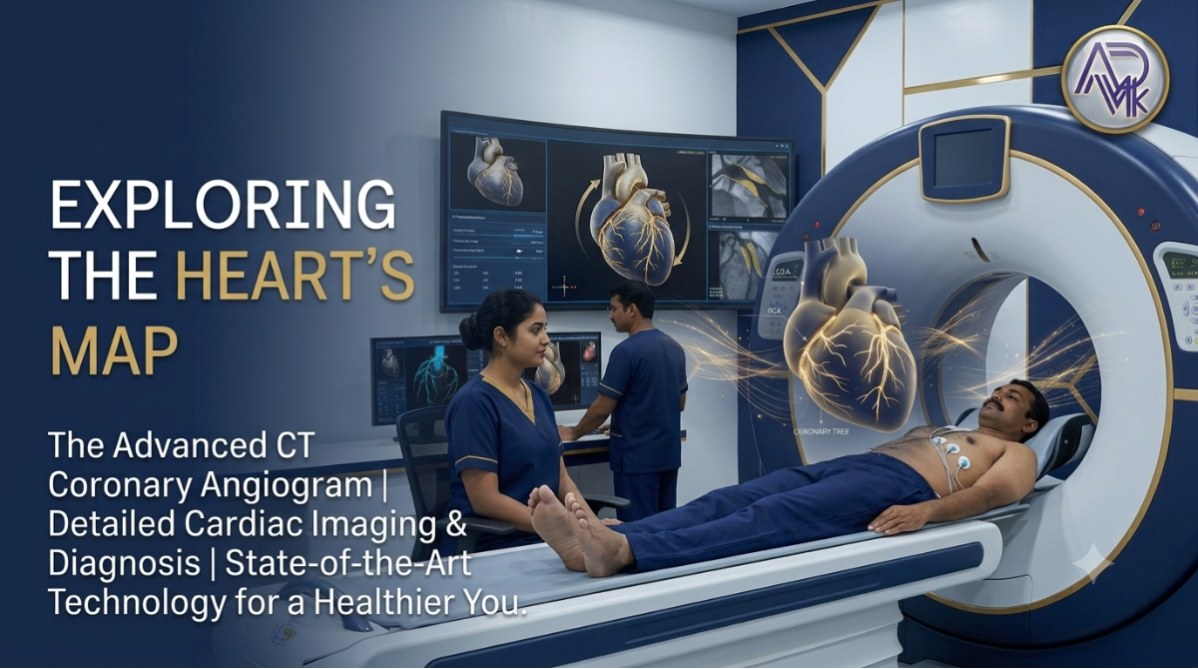
What is a CT Coronary Angiogram - A Smart Guide in 2026?
A CT Coronary Angiogram (CTCA) is a non-invasive imaging test that creates detailed images of the coronary arteries, which supply blood to the heart. It combines computed tomography (CT) technology with a contrast dye to detect narrowing, blockages, or plaque buildup in the arteries. This test helps doctors diagnose heart conditions, evaluate chest pain, and assess the risk of coronary artery disease.
What are the disadvantages of a CT Coronary angiogram?
- A CT Coronary Angiogram (CTCA) is a useful, non-invasive test, but it does have some limitations:
- Radiation exposure: Although modern scanners use lower doses, it still involves exposure to X-ray radiation.
- Use of contrast dye: The iodine-based contrast can cause allergic reactions in some people and may affect kidney function, especially in patients with existing kidney disease.
- Not suitable for everyone: It may not give accurate results in people with very high heart rates, irregular heart rhythms, heavy coronary calcification, or obesity.
- Limited functional information: CTCA shows artery structure well but does not assess blood flow or severity of blockage under stress, unlike some other heart tests.
- Incidental findings: Sometimes it detects unrelated findings, which can lead to additional tests, anxiety, or costs.
Doctors usually recommend a CT coronary angiogram only when the benefits outweigh the risks, based on a patient's symptoms, age, and medical history.
How does CT Coronary angiography work?
CT Coronary Angiography (CTCA) is a non-invasive imaging test used to check the blood vessels that supply the heart (coronary arteries). It helps doctors detect blockages, narrowing, or plaque buildup without the need for traditional catheter-based angiography.
Here's how it works, step by step:
Heart Rate Preparation
Before the scan, medicines may be given to slow the heart rate so clearer images can be captured. This helps reduce motion and improves accuracy.
Contrast Dye Injection
A special iodine-based contrast dye is injected into a vein, usually in the arm. This dye flows through the coronary arteries and makes them clearly visible on CT images.
CT Scanning Process
The patient lies on a table that moves through a CT scanner. The scanner takes multiple high-speed X-ray images from different angles while the heart is beating.
Image Reconstruction
Advanced computer software converts these images into detailed 3D views of the coronary arteries, allowing doctors to see even minor narrowing or blockages.
Analysis by Specialist
A radiologist or cardiologist analyzes the images to assess:
Blood flow to the heart
Presence of plaque or calcium
Degree of artery narrowing
CT Coronary Angiography is quick, painless, and highly accurate, making it especially useful for evaluating chest pain, ruling out coronary artery disease, and planning further treatment if needed.
How to Prepare for a CT Coronary Angiogram?
A CT Coronary Angiogram (CTCA) is a non-invasive imaging test used to examine the coronary arteries that supply blood to the heart. Proper preparation is essential to ensure accurate results, smooth scanning, and patient safety.
Below is a complete, step-by-step guide to help you prepare for the test.
- Fast for 4–6 hours before the scan; water may be allowed.
- Avoid caffeine, smoking, and stimulants for 12–24 hours.
- Inform your doctor about medical conditions like diabetes, kidney disease, asthma, or allergies.
- Discuss medications you're taking; some may need to be paused, and heart-rate–lowering medicine may be given.
- Stay hydrated the day before the test.
- Wear comfortable clothing and remove all metal objects.
- Be prepared for a contrast dye injection, which may cause a brief warm sensation.
- Arrive early and follow breathing instructions during the scan.
- After the test, drink plenty of fluids and resume normal activities unless advised otherwise.
- Proper preparation ensures clear images and an accurate assessment of your heart arteries.
What happens before the CT Coronary Angiogram Procedure?
Before a CT Coronary Angiogram, a few important steps are taken to ensure your safety and obtain clear, accurate images of the heart's arteries.
First, your medical history and current medications are reviewed, including any allergies, kidney problems, or heart conditions. You may be asked to fast for several hours and avoid caffeine or smoking before the test.
Your heart rate and blood pressure are checked, and if needed, medications such as beta-blockers may be given to slow the heart rate for better image quality. A small IV line is placed in your arm to administer contrast dye during the scan.
You will be asked to remove metal objects and change into comfortable clothing or a gown. The procedure and breathing instructions are explained so you feel relaxed and prepared before the scan begins.
What happens during the CT Coronary Angiogram Procedure?
A CT Coronary Angiogram (CTCA) is a non-invasive scan that allows doctors to examine the coronary arteries and assess blood flow to the heart. The procedure is safe, quick, and usually completed within a short time.
During the test, you will lie comfortably on the CT scan table. Electrodes are placed on your chest to monitor your heart rate, as a slow and steady heartbeat is essential for clear images. If needed, medication may be given to control your heart rate.
A contrast dye is then injected through a vein in your arm to highlight the coronary arteries. You may feel a brief warm sensation or metallic taste, which is normal and passes quickly.
As the scan begins, the table moves through the CT scanner. You will be asked to hold your breath for a few seconds while images are taken. The scan itself lasts only a few seconds, though the entire procedure may take about 15–30 minutes, including preparation.
After the scan, you can usually return to normal activities. Drinking plenty of fluids helps flush the contrast dye from your body. The images are later reviewed by a specialist to check for any narrowing or blockages in the heart arteries.
What happens after the CT Coronary Angiogram Procedure?
After a CT Coronary Angiogram, patients are usually observed for a short time to ensure they feel well, especially if contrast dye or heart-rate–lowering medication was used. Most people can resume normal activities the same day unless advised otherwise by their doctor.
You will be encouraged to drink plenty of fluids to help flush the contrast dye from your body. Mild effects such as warmth, headache, or slight fatigue may occur and usually pass quickly.
The scan images are reviewed by a specialist, and results are shared with your doctor, who will explain whether your coronary arteries are normal or if further evaluation or treatment is needed.
What CT Coronary Angiogram Results?
CT Coronary Angiogram (CTCA) results show how well blood is flowing through the coronary arteries and whether there are any blockages or abnormalities.
Common results include:
- Normal arteries: No blockages; blood flow is normal.
- Mild blockage (less than 50%): Early plaque buildup; usually managed with lifestyle changes and medication.
- Moderate blockage (50–70%): Reduced blood flow; may need further tests or treatment.
- Severe blockage (more than 70%): High risk of heart problems; often requires intervention like angioplasty or surgery.
- Calcium score: Indicates the amount of calcium buildup in the arteries, helping assess heart disease risk.
Your doctor will interpret these results along with symptoms and medical history to decide the next steps in treatment or monitoring.
What is a CT Coronary Angiogram with Calcium Score?
A CT Coronary Angiogram with Calcium Score is an advanced, non-invasive heart imaging test that evaluates both calcium buildup and blood flow in the coronary arteries. It helps doctors detect early signs of coronary artery disease (CAD) before symptoms become severe.
The calcium score measures the amount of calcified plaque present in the coronary arteries. A higher score indicates a greater risk of heart disease. The CT coronary angiogram part uses contrast dye to create detailed images of the arteries, allowing doctors to identify narrowing, blockages, or plaque buildup.
This combined test is especially useful for:
- People with chest pain or shortness of breath
- Individuals with risk factors such as diabetes, high blood pressure, or a family history of heart disease
- Early detection and risk assessment of heart conditions
The procedure is quick, painless, and safe, providing valuable information that helps guide treatment decisions, lifestyle changes, and preventive care.
What is the Difference Between a CT Coronary Angiogram vs Coronary Angiogram?
A CT Coronary Angiogram (CTCA) and a Coronary Angiogram are both used to detect blockages in the heart's arteries. Still, they differ in how they are performed, their level of invasiveness, and when each test is recommended.
- CT Coronary Angiogram (CTCA):
A non-invasive CT scan that uses contrast dye to create detailed images of the heart arteries. It is mainly used for screening and early detection of coronary artery disease, with low risk and quick recovery.
- Coronary Angiogram:
An invasive procedure in which a catheter is inserted into an artery to view blood flow in the coronary arteries directly. It is used when significant blockage is suspected and allows immediate treatment, such as stent placement.
CTCA is for diagnosis and screening, while a coronary angiogram is for diagnosis plus treatment, depending on the condition.
CT Coronary Angiogram: How Long Does it Take
A CT Coronary Angiogram (CTCA) is a quick and non-invasive test.
The actual scan usually takes only 10–15 minutes.
However, including preparation, the total time at the diagnostic center is about 30–60 minutes. This extra time is needed for:
Checking vital signs
Heart-rate control (if required)
Contrast dye injection
Post-scan observation
In most cases, patients can go home the same day and resume normal activities shortly after.
Which is better CT angiogram or a CT Coronary Angiogram?
A CT Angiogram (CTA) and a CT Coronary Angiogram (CTCA) are both advanced imaging tests that use CT technology and contrast dye to visualize blood vessels. However, neither test is universally "better." The better option depends entirely on what part of the body needs evaluation and the medical concern involved.
Neither test is better overall—the right choice depends on the purpose.
- CT Coronary Angiogram (CTCA): Best for examining the heart's coronary arteries. It is used to detect blockages, plaque buildup, and coronary artery disease.
- CT Angiogram (CTA): Used to evaluate blood vessels in other parts of the body, such as the brain, lungs, kidneys, or limbs.
When should I call my doctor?
You should call your doctor if you experience new, persistent, or worsening symptoms, or if something doesn't feel right with your health. Early communication helps prevent complications and ensures timely care.
Call Your Doctor Promptly If You Have:
- Chest pain, pressure, or tightness, especially if it spreads to the arm, jaw, or back
- Shortness of breath, dizziness, or fainting
- Persistent cough, coughing up blood, or wheezing that doesn't improve
- Unexplained fatigue, weakness, or swelling in the legs or ankles
- Irregular or rapid heartbeat
- Fever, chills, or signs of infection that last more than a few days
- Allergic reactions such as rash, itching, swelling, or breathing difficulty
- Abnormal test results or symptoms after a medical procedure or scan
After a Scan or Procedure, Contact Your Doctor If You Notice:
- Severe or increasing pain
- Redness, swelling, or discharge at an injection site
- Nausea, vomiting, or reduced urine output
- Any symptom that is unexpected or worsening
Emergency Care
Seek immediate medical help if symptoms are severe, sudden, or life-threatening—especially intense chest pain, difficulty breathing, confusion, or collapse.
Bottom line: If symptoms are persistent, unusual, or concerning, it's always safer to call your doctor and get guidance early.
What is the CT Coronary Angiogram Test in Delhi?
A CT Coronary Angiogram (CTCA) is a non-invasive heart scan used to check the coronary arteries for blockages, narrowing, or plaque buildup.
It uses advanced CT imaging and contrast dye to produce detailed 3D images of the heart's blood vessels, helping doctors diagnose coronary artery disease early.
In Delhi, this test is commonly recommended for people with chest pain, shortness of breath, abnormal stress test results, or a high risk of heart disease. The procedure is quick, safe, and usually completed within 20–30 minutes.
Delhi has several well-equipped diagnostic centers offering advanced CT technology and expert cardiac imaging, making it a reliable place to undergo this test.
Where is the CT Coronary Angiogram Test Near Me?
A CT Coronary Angiogram (CTCA) is a non-invasive heart scan used to check the coronary arteries for blockages or narrowing that may cause chest pain or heart disease. It uses advanced CT imaging and contrast dye to produce detailed images of the heart and blood vessels without surgery.
Doctors commonly recommend this test to detect coronary artery disease early, assess heart health, and guide treatment decisions.
You can locate trusted diagnostic centers offering this test near your area through the links below:
What is the CT Coronary Angiogram Cost in Delhi?
The CT Coronary Angiogram (CTCA) cost in Delhi generally ranges between ₹10,000 and ₹17,000, depending on the diagnostic centre, scanner technology, and services included.
Quick Suggestions
- Prices vary across centres, so it's best to compare trusted diagnostic providers before booking.
- Some centres offer packages or discounted rates, which can reduce the overall cost.
- You can check reliable options and compare details here:
Conclusion
A CT Coronary Angiogram is a safe, non-invasive, and highly effective imaging test for evaluating the coronary arteries and overall heart health. It helps detect blockages, narrowing, or plaque buildup at an early stage, allowing doctors to diagnose heart disease accurately and plan timely treatment.
With proper preparation and medical guidance, the procedure is quick, well-tolerated, and provides detailed images without the need for invasive catheter-based angiography in many cases. If recommended by your doctor, a CT Coronary Angiogram can play a vital role in early diagnosis, risk assessment, and prevention of serious cardiac events, helping you take informed steps toward better heart health.
Leave a comments